iTunes Backup Corrupt or Not Compatible? How to Fix It



You plug in your iPhone, start the restore and iTunes stops you cold. The backup was corrupt or not compatible. That single message covers two completely different problems, and one of them isn’t even damage. Here’s what each one means, how to fix both and how to pull your data out when iTunes keeps refusing.
Summary
The iTunes backup corrupt or not compatible error has two separate causes. Not compatible means the backup came from a newer iOS version than the device you’re restoring. Corrupt means iTunes failed a file check, and the data is recoverable in many cases. Both leave your files sitting on the disk.
| Error Situation | Real Cause | Is the Data Recoverable? |
|---|---|---|
| Not compatible during restore | Backup made on a newer iOS than the target device | Yes, fully intact |
| Corrupt during restore | Damaged Manifest.db or a failed file check | Yes in many cases, files still on disk |
| Corrupt during a new backup | An old broken backup is blocking the new one | Yes, your data is still on the phone |
| Backup was interrupted | Cable, sleep or a crash cut the backup midway | Partially, only what was written before the cut |
Table of Contents
What Does Corrupt or Not Compatible Actually Mean?
iTunes bundles two unrelated failures into one alert, which is why the fix depends on which half applies to you.
Not compatible is a version problem, not a data problem. Your backup was created on a newer iOS than the phone you’re restoring to, so iTunes refuses to load it onto older software. Apple explains this case in its guide on restoring a device that needs a newer version of iOS. Every file inside the backup is untouched.
Corrupt means iTunes ran a validation check on the backup and something failed. That sounds final, but it isn’t. The check can fail because of one damaged index file while thousands of photos and messages sit on your disk in perfect condition.
Before you try any fix, know where the backup lives. On Windows it sits in one of two hidden folders, and our guide on where iPhone backups are stored on Windows shows both paths in five seconds.
Why Does iTunes Say the Backup Is Corrupt?
Four causes account for nearly every corrupt backup we’ve seen.
The backup was interrupted. A loose cable, a USB hub dropout or the PC going to sleep mid backup leaves the folder half written. iTunes spots the incomplete file set and flags it.
Manifest.db is damaged. This single database file is the index for the entire backup. Each of your files is saved under a 40 character hashed name, and Manifest.db maps those names back to real files. Damage the index and iTunes can’t verify anything, even though the files themselves are fine.
Security software interfered. Apple’s own troubleshooting guide for backup and restore failures tells Windows users to update, disable or uninstall security software when backups fail or never finish. Antivirus tools lock files mid write and corrupt the result.
The disk itself has errors. Bad sectors on the drive holding the backup folder silently damage whatever lands on them. Run chkdsk if corruption keeps repeating on the same PC.
How Do You Fix the Not Compatible Error?
Update the iPhone first, then restore. That’s the entire fix.
- Set the iPhone up as new for now. On the Transfer Your Apps and Data screen, tap Don’t Transfer Apps and Data.
- Open Settings, then General, then Software Update. Install the latest iOS.
- After the update, open Settings, then General, then Transfer or Reset iPhone, and choose Erase All Content and Settings.
- When the phone restarts, connect it to your PC and restore the backup through iTunes or the Apple Devices app.
Because the phone now runs an iOS version equal to or newer than the backup, iTunes accepts it. Your backup was never damaged in this scenario.
How Do You Fix a Corrupt Backup Error?
Work through these five steps in order. Each one clears a different cause, and together they resolve most corrupt flags that aren’t real file damage.
- Update iTunes or the Apple Devices app, then restart the PC and the iPhone.
- Swap to a different USB cable and plug straight into the PC. Skip hubs and front panel ports.
- Pause your antivirus for the duration of the backup or restore, then turn it back on.
- Free up disk space. A restore needs room to unpack, so keep at least 20GB free on C:.
- If the error appears while creating a new backup, move the old device folder out of the Backup directory and try again. iTunes writes a fresh backup once the broken one stops blocking it.
Never delete a corrupt backup that holds your only copy
iTunes will suggest deleting the backup and starting over. That advice destroys your data when the phone was lost, erased or traded in. Move the backup folder to a safe location instead, then extract what’s inside before you let iTunes touch it.
“The not compatible error scares people the most, and it’s the one that involves zero damage. It simply means the backup came from a newer iOS than the phone you’re restoring to. The data inside is completely intact. iTunes just refuses to load it onto older software.”
Viralkumar Patel in | iData Backup Viewer Team, CYBERSICS SOLUTIONS
How Do You Recover Data From a Backup That Won’t Restore?
A restore is all or nothing. iTunes either accepts the whole backup or gives you none of it. A backup viewer skips that gate entirely. iData Backup Viewer reads the backup folder directly on Windows 10 and 11, so a failed iTunes validation doesn’t stop it from opening whatever files are present on the disk.
- Download and install iData Backup Viewer on the PC that holds the backup.
- Launch the app. It finds backups in both Windows locations automatically, including ones iTunes refuses to list.
- Select the problem backup from the detected list.
- Enter the backup password if it’s encrypted.
- Preview your iMessages, WhatsApp chats, photos, contacts and call history. Whatever displays is readable, and you can export it.
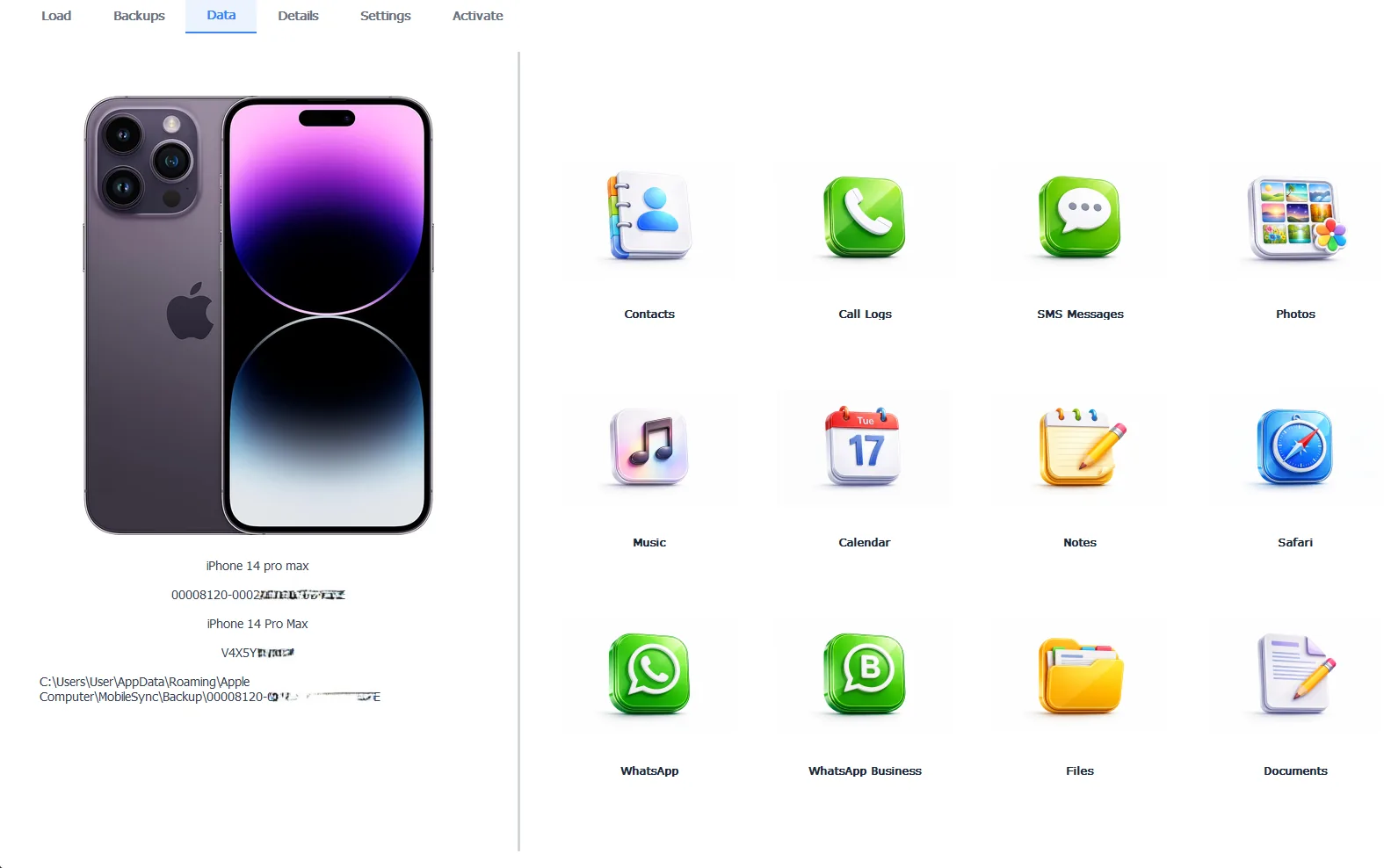
Step 5: iData Backup Viewer displaying readable data from a backup that iTunes flagged
The free version previews everything first. So you see exactly which messages and photos survived before spending anything. The Pro edition at $49 per year unlocks full exports, and processing stays 100% local on your PC.
Free version previews your backup contents. Works on Windows 10 and 11.
When Is the Data Actually Gone?
Honesty matters more than hope here. Three situations put data beyond reach for any tool, ours included.
The backup was cut off before those files were written. An interrupted backup contains only what made it to disk before the disconnect. Files that never arrived can’t be recovered from the backup, because they were never in it.
The backup folder was deleted and emptied from the Recycle Bin. At that point you’re in deleted file recovery territory on the Windows drive itself, which is a different problem with much lower odds.
The backup is encrypted and the password is lost. Apple states there’s no way to restore an encrypted backup without its password, and no honest tool claims otherwise. If any of your devices remember the password, try those before giving up.
So read the error again before you panic. Not compatible means update the phone and restore, with nothing lost. Corrupt means iTunes failed a check, while your files most likely sit intact on the disk behind a damaged index. The one move that turns a bad day into a disaster is deleting that folder before extracting what’s inside.
Want to see what’s still readable inside your flagged backup right now?
Frequently Asked Questions
Can I recover data from a corrupt iTunes backup?
In many cases, yes. The corrupt label means iTunes failed a validation check, not that every file is destroyed. A backup viewer like iData Backup Viewer reads the files directly and shows you exactly what survived, free, before you commit to anything.
Why does iTunes say my backup is not compatible?
The backup was made on a newer iOS version than the device you are restoring to. The data inside is fully intact. Update the iPhone to the latest iOS first, then run the restore again.
Will deleting the corrupt backup fix the error?
Only when the error appears while creating a new backup and your data still lives on the phone. If the corrupt backup holds the only copy of your data, never delete it. Move the folder somewhere safe and extract the data first.
Can antivirus software corrupt an iTunes backup?
Yes. Apple lists security software as a known cause of failed and incomplete backups on Windows. Pause it during backup and restore, then turn it back on afterward.
Does encryption cause the corrupt backup error?
No. A wrong password produces its own separate prompt. An encrypted backup can still turn corrupt for the same reasons as any other backup, and it stays readable in iData Backup Viewer once you enter the correct password.
How do I stop backups from getting corrupted again?
Use a direct USB port instead of a hub, keep the PC awake for the whole backup, leave at least 20GB of free disk space and keep iTunes or the Apple Devices app updated. Most corruption traces back to one of these four.
Written by Viralkumar Patel in
Viralkumar works on iData Backup Viewer at CYBERSICS SOLUTIONS, where he helps Windows users read, recover and export data from iPhone backups.