iPhone Backup Keeps Failing? Every Cause and Fix



A backup failing once is weather. A backup failing every time is a system with one specific broken part, still broken on every retry. When an iphone backup keeps failing, the repeat itself is the clue, because recurring failures come from conditions that persist, full storage, a dying cable, a damaged old backup, rather than bad luck. Find the persistent condition and the loop ends today.
Summary
When an iPhone backup keeps failing, identify which backup first. iCloud failures come from full iCloud storage almost every time. Computer backup failures come from low disk space, cable problems, antivirus interference or a damaged existing backup that makes each new run die. Each has a two minute fix below.
| Where It Fails | The Likely Persistent Cause |
|---|---|
| iCloud, night after night | iCloud storage full |
| Computer, dies partway through | Cable, hub or antivirus interference |
| Computer, fails almost immediately | Not enough free space on the PC |
| Computer, fails at the very end | Damaged existing backup folder |
Table of Contents
Which Backup Keeps Failing, iCloud or Computer?
The two systems share a purpose and nothing else, so the diagnosis starts by naming the patient. Failures announced on the iPhone itself, the iPhone Backup Failed banner or a nagging red badge in Settings, belong to iCloud. Failures announced in iTunes or the Apple Devices app on your PC belong to the computer backup. Skip to your half. The causes never overlap.
Why Does an iCloud Backup Keep Failing?
Storage, nearly always. Apple’s free tier grants 5GB while an average iPhone carries many times that, so the automatic nightly backup hits the ceiling and dies on schedule, forever. Check Settings, your name, then iCloud. A full bar means every retry is doomed before it starts.
Three exits exist. Pay for more iCloud storage. Shrink the backup by turning off heavyweight categories under iCloud Backup. Or move the job to your computer, where backups cost nothing, have no ceiling beyond your drive and land somewhere you can actually open, the case our guide to backing up an iPhone to a computer makes in full. Automatic iCloud runs also demand the phone locked, charging and on Wi-Fi overnight, so a phone that sleeps off the charger fails on conditions alone.
Why Does a Computer Backup Keep Failing?
Cause 1. The PC is out of room. A backup needs free space roughly matching the iPhone’s used storage and a stuffed C: drive kills runs early. Free up space or send backups to another drive entirely with the junction method in our guide to backing up an iPhone to an external drive.
Cause 2. The connection drops midway. Backups that die at random points blame the transport. Use the original cable in a rear USB port, never a hub, then work through our guide to iPhones not showing up in iTunes if the phone also flickers in and out of view.
Cause 3. Antivirus seizes files mid-write. Security software watching thousands of files appear at speed sometimes quarantines a few, which fails the run. Add the MobileSync folder to your antivirus exclusions, restore anything already quarantined and retry. Apple’s own backup troubleshooting page points at security software for exactly this reason.
Cause 4. The existing backup is the saboteur. Computer backups update one folder per device in place rather than writing fresh copies, so a damaged folder from an old interrupted run can fail every new run that tries to build on it. The tell is failure at the same late stage every time. The fix is archiving that folder elsewhere, then renaming it so the next run starts clean, with the damaged copy handled by our guide to fixing a corrupt iTunes backup.
What Does Session Failed Mean?
The backup session failed message is the vaguest of the family, announcing a conversation between iTunes and the iPhone that broke down without saying who hung up. Restart both devices first, since stale services on either side cause most of these. Then retry with the fresh cable and port from Cause 2. Persisting after both, it points at the existing-folder problem in Cause 4, the archive-and-rename fix included.
How Do You Protect the Backups You Already Have?
Before any experiment above, bank what you hold. In-place updating means a botched retry can degrade the last complete backup on the machine, so copy the current device folder to another drive first, whole. Two minutes of copying insures years of history.
Then verify the insurance. iData Backup Viewer opens any backup folder on Windows 10 or 11 and shows the messages, photos, contacts and everything else inside, free. A backup that opens and displays your life is a backup worth protecting. One that won’t open tells you the sabotage already happened, which changes today’s job from fixing runs to recovering the data first.
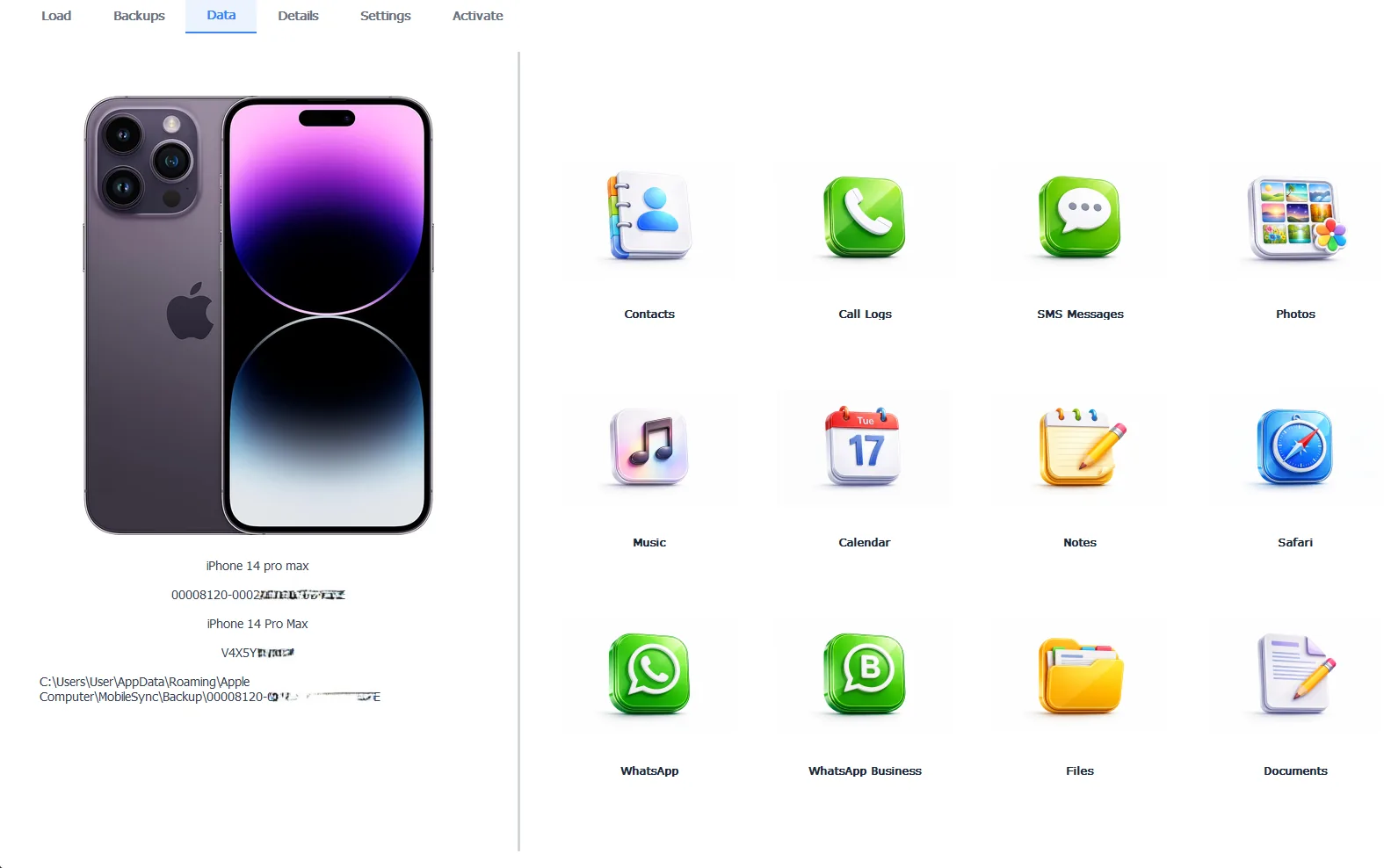
The last good backup, verified readable before any retry experiments
Previewing is free, exporting takes the Pro edition at $49 per year and every operation stays 100% local.
Free version previews your backup contents. Works on Windows 10 and 11.
“Repeat failures are honest. They fail the same way for the same reason every time, which makes them the easiest bugs in this whole field. The pattern tells you the cause. Immediate death is disk space, random death is the cable, same-stage death is the old folder. Read the pattern and you’re done.”
Viralkumar Patel in | iData Backup Viewer Team, CYBERSICS SOLUTIONS
So end the loop with the pattern. Nightly iCloud failures mean storage. Instant computer failures mean disk space. Random ones mean the cable. Same-stage ones mean the old folder. Copy your good backup aside, apply your row’s fix and tonight’s run finishes for the first time in weeks. If the runs stay slow rather than failing, that’s a different animal, handled in our guide to backups taking forever.
Which failure pattern has yours been showing all along?
Frequently Asked Questions
Why does my iPhone backup fail every single night?
Nightly failures point at automatic iCloud backups, which run when the phone sits locked, charging and on Wi-Fi. The recurring cause is iCloud storage that stays full, so the failure repeats until storage changes or the backup moves to a computer.
Does deleting the old backup stop the failures?
A damaged existing backup does make new runs fail, so replacing it works. Archive a copy of the old folder first though, then rename or remove it so the next run builds fresh. Deleting your only copy before the new backup succeeds is the one unforgivable order of operations.
How much space does a computer backup need?
Plan for roughly the used storage shown on the iPhone, meaning tens of gigabytes for most phones. A nearly full C: drive is a quiet, common reason runs keep dying partway.
Can a failed run damage the backup I already have?
It can. Computer backups update one folder per device in place, so a run that dies midway leaves that folder in a mixed state. That risk is exactly why copying a known good backup aside before retrying is worth the two minutes.
Is iCloud or a computer backup more reliable?
Both fail for different reasons, iCloud from storage limits and Wi-Fi conditions, computer runs from cables, disk space and interference. Running both, which Apple supports happily, means one failing never leaves you exposed.
How do I confirm my last good backup is actually intact?
Open it and look at the contents. A backup viewer showing your messages, photos and contacts inside is proof no progress bar or checkmark can match.
Written by Viralkumar Patel in
Viralkumar works on iData Backup Viewer at CYBERSICS SOLUTIONS, where he helps Windows users read, recover and export data from iPhone backups.