How to Find Your iPhone Backup on Windows 11



Your backup is on this PC somewhere. Windows just hides the folder it lives in, Windows Search refuses to look there and Apple named everything in hexadecimal for good measure. To find iPhone backup Windows 11 files takes one pasted path once you know which of the two possible paths your setup uses. This guide settles that in under a minute, then handles the empty folder surprises.
Summary
To find your iPhone backup on Windows 11, paste %APPDATA%\Apple Computer\MobileSync\Backup into the File Explorer address bar for desktop iTunes or %USERPROFILE%\Apple\MobileSync\Backup for Microsoft Store iTunes and the Apple Devices app. Each subfolder inside is one device’s backup.
| The App That Made the Backup | Where It Put the Backup |
|---|---|
| iTunes downloaded from apple.com | Inside AppData\Roaming\Apple Computer |
| iTunes from the Microsoft Store | Inside your user folder under Apple |
| Apple Devices app | Same user folder location as Store iTunes |
Table of Contents
What Are the Two Backup Locations on Windows 11?
Which path holds your backup depends entirely on which app created it, a split Apple documents without much fanfare. iTunes installed from apple.com writes here.
iTunes from the Microsoft Store and the newer Apple Devices app, the one Windows 11 machines increasingly run, write here instead.
Unsure which app made your backups? Check both. Plenty of PCs that switched apps over the years carry backups in both places at once. The full history of the two locations lives in our reference on where iPhone backups are stored on Windows.
How Do You Find Your iPhone Backup on Windows 11?
Method 1. Paste the shortcut path. Open File Explorer, click the address bar and paste %APPDATA%\Apple Computer\MobileSync\Backup for desktop iTunes or %USERPROFILE%\Apple\MobileSync\Backup for the Store and Apple Devices variants, then press Enter. Windows expands the shortcut to your own user folder and drops you inside. No hunting through menus.
Method 2. Unhide AppData and browse. AppData is a hidden folder, which is the whole reason casual browsing never finds it. In Windows 11’s File Explorer, click View in the toolbar, hover over Show and tick Hidden items. AppData appears in your user folder, translucent. The click path Roaming then Apple Computer then MobileSync then Backup finishes the trip.
Method 3. Let iTunes point the way. iTunes lists every backup it knows under Edit, then Preferences, then Devices, with device names and dates. The list confirms your backups exist and when they last ran, even though Apple keeps the folder path itself off that screen.
Folder Empty or Missing? The Four Reasons
Reason 1. You’re at the wrong one of the two paths. The most common miss by far. A backup made by the Apple Devices app will never appear in the AppData location, so check its sibling before concluding anything.
Reason 2. The backups went to iCloud instead. On the iPhone, open Settings, tap your name, then iCloud, then iCloud Backup. If that switch is on and nobody ever chose the computer option, your backups live on Apple’s servers, not this PC. Our guide to backing up an iPhone to a computer creates your first local one.
Reason 3. A different Windows user made them. Both paths sit inside a specific user profile. Backups created while your spouse’s account was signed in sit under C:\Users\[their name], invisible from yours. One PC, one iPhone, several possible homes.
Reason 4. The backup never finished. A run that stalled or failed leaves nothing usable behind. Our guide to iPhone backups taking forever diagnoses slow against stuck and gets a complete backup on disk.
Which Backup Belongs to Which iPhone?
Success looks anticlimactic. Inside the Backup folder sit one or more subfolders named things like 00008120-000A48EF0E38401E, forty characters of hash with no device name anywhere File Explorer can show. The modified dates narrow down freshness, yet three folders from three family iPhones stay anonymous.
iData Backup Viewer ends the guessing. Point it at your backups on Windows 10 or 11 and it labels each one with its device name, model and backup date, then opens the contents, messages, photos, contacts and the rest, free to browse. Finding the folder was the hard part. Reading it takes one click.
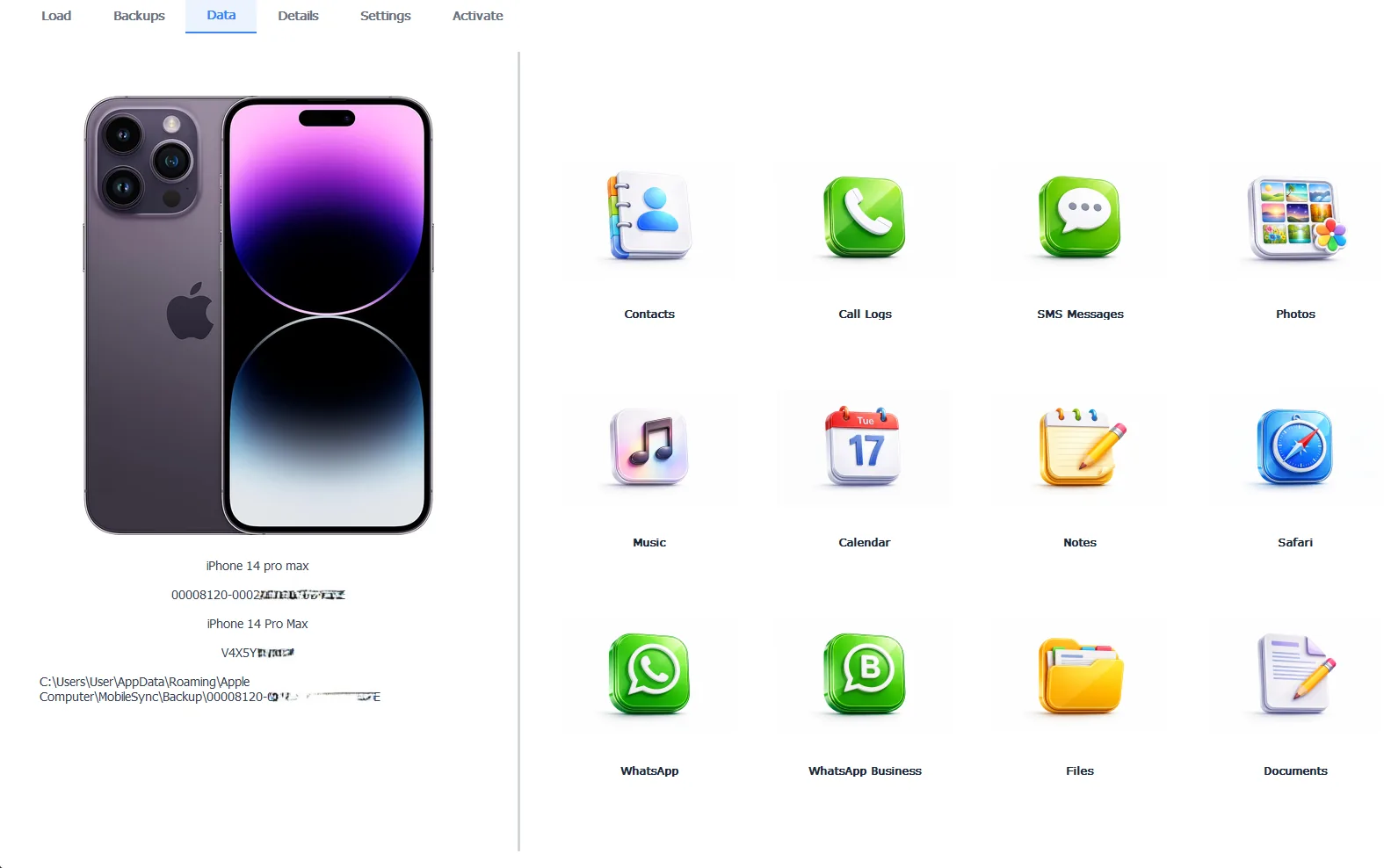
Hashed folders resolved into named devices with browsable contents
Previewing costs nothing and exporting takes the Pro edition at $49 per year, with everything running 100% locally.
Free version previews your backup contents. Works on Windows 10 and 11.
“The support tickets that start with my backup vanished almost always end with it was in the other path. Two apps, two folders, one confused user. Check both locations and both user accounts before assuming a backup is gone, because Windows 11 hides them well and deletes them never.”
Viralkumar Patel in | iData Backup Viewer Team, CYBERSICS SOLUTIONS
What Can You Do with the Backup Once Found?
Four useful moves, each with its own guide. Browse everything inside it, mapped in our pillar on what an iPhone backup contains. Copy the whole device folder to a second drive as insurance, the folder being the backup. Relocate future backups off your C: drive entirely with the junction method in backing up an iPhone to an external drive. Or reclaim tens of gigabytes the safe way through deleting iPhone backups on Windows, previewing before anything is removed.
So the hunt comes down to this. Two paste-ready paths, a hidden-items toggle for the scenic route, four explanations for an empty folder and a viewer that turns hash names back into iPhone names. Your backup was never lost. It was just filed where Windows doesn’t give tours.
Which of the two paths turned out to be yours?
Frequently Asked Questions
Are backups in the same place on Windows 11 as Windows 10?
Yes, identical. Windows 11 changed File Explorer’s menus, not Apple’s folder paths, so both locations in this guide work unchanged on Windows 10.
Can I move the backup location to another drive?
Not through any Apple setting, but a Windows folder junction redirects it cleanly. Our guide to backing up an iPhone to an external drive walks the whole five minute setup.
Why can’t Windows Search find my backup?
Search skips hidden system folders like AppData by default, so the backup sits invisible to it. Pasting the path into the File Explorer address bar goes straight there instead.
Is the backup a single file or a folder?
A folder, holding thousands of files with hashed names sorted into subfolders. The whole device folder is the backup, which is why copying it means copying the entire folder.
Is it safe to open the backup files directly?
Looking is safe. Editing, renaming or deleting individual files inside is not, since iTunes then treats the whole backup as damaged. A backup viewer reads everything without altering a byte.
Where do iCloud backups appear on my PC?
They don’t. iCloud backups live on Apple’s servers only, so no folder on Windows contains them. Only backups made through iTunes or the Apple Devices app land on your computer.
Written by Viralkumar Patel in
Viralkumar works on iData Backup Viewer at CYBERSICS SOLUTIONS, where he helps Windows users read, recover and export data from iPhone backups.